
Winter can be tough on everyone, but for those working long or demanding shifts, the darker days and colder weather can take an extra toll. Whether you’re a healthcare professional, working in retail, hospitality, or any shift-based role, maintaining your energy and wellbeing through the season is key not only to performing well but also to protecting your health.
If you’ve ever found yourself struggling with low energy during winter, you’re not alone. Research shows that shorter daylight hours can disrupt our circadian rhythm and lower vitamin D levels, which often impacts mood and motivation (NHS, 2023). Add to that the demands of busy shifts and it’s no wonder fatigue can creep in.
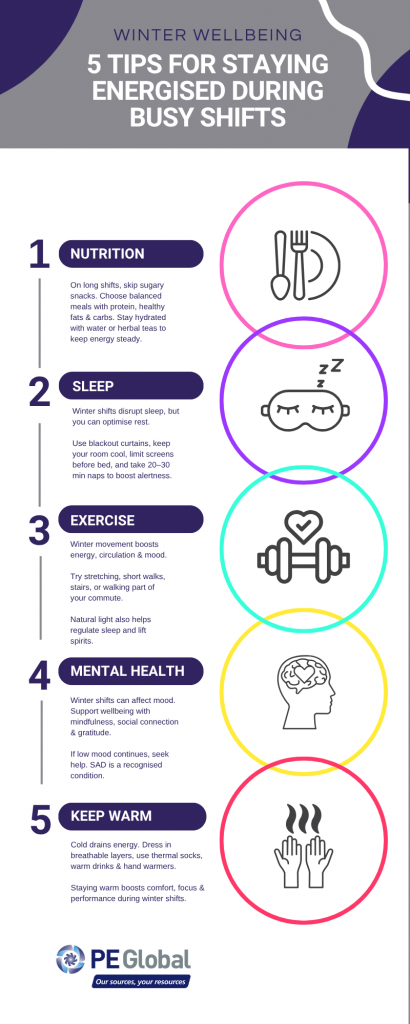
To help, here are five simple but effective winter wellbeing tips to keep you energised throughout your shifts.
Feeling physically cold can quickly sap your energy. Dressing in breathable layers allows you to adjust to fluctuating workplace temperatures while staying comfortable.
1. Fuel Your Body with Smart Nutrition
It can be tempting to grab quick comfort food on a long shift, but what you eat has a direct impact on your energy levels. Instead of relying on sugary snacks or caffeine alone, focus on balanced meals that combine protein, healthy fats and slow-release carbohydrates.
Think overnight oats with nuts, soup packed with vegetables, or hummus with wholegrain crackers for your breaks. Staying hydrated is just as important dehydration, which often disguises itself as fatigue. Keeping a water bottle nearby and sipping throughout your shift can make a noticeable difference.
Tip: If you struggle with hydration in colder months, try herbal teas. They provide warmth and fluid without added sugar or caffeine.
2. Prioritise Sleep (Even if it’s Broken)
Shift work often means irregular sleeping patterns, which can be especially challenging in winter when natural daylight is scarce. While you may not always get a perfect 7–9 hours in one block, you can still optimise rest by creating a “sleep-friendly” environment.
- Use blackout curtains or an eye mask to block out light during the day.
- Keep your bedroom cool but cosy, between 16–18°C is ideal.
- Limit screen time before bed to help your body wind down.
Short naps (20–30 minutes) can also help restore alertness if you’re in the middle of a demanding run of shifts.
3. Move Your Body, Even in Small Ways
Exercise may be the last thing on your mind during winter, but movement, even in small doses, can be one of the most effective energy boosters. Light activity stimulates circulation, eases stiffness and helps fight the sluggishness that winter often brings.
If you can’t fit in a full workout, consider stretching during breaks, taking the stairs instead of the lift, or going for a short walk outdoors when possible. Exposure to natural daylight, even for 15 minutes, can help regulate your sleep-wake cycle and lift your mood.
Tip: Walking to or from work, even partially, can double up as physical activity and a way to catch some natural light.
4. Protect Your Mental Wellbeing
Busy shifts combined with winter pressures can sometimes affect mood and motivation. It’s important to look after your mental wellbeing as much as your physical health.
- Practise mindfulness or short breathing exercises between tasks.
- Stay socially connected: chatting with colleagues, friends, or family can make a big difference.
- Don’t underestimate the power of a gratitude habit; writing down three small positives at the end of each day can help shift your mindset.
If low mood persists, remember it’s okay to seek support from a GP or occupational health service. Seasonal affective disorder (SAD) is a recognised condition.
5. Keep Warm, Stay Comfortable
Feeling physically cold can quickly sap your energy. Dressing in breathable layers allows you to adjust to fluctuating workplace temperatures while staying comfortable. Thermal socks or base layers can be especially helpful if you’re working long hours on your feet.
Even simple habits like taking a warm drink to work, using hand warmers, or keeping a scarf handy for commutes can make winter feel a little more manageable. Comfort directly impacts performance. When you’re warm, you’re less distracted and more focused.
Final Thoughts
Winter can present unique challenges for anyone working long or irregular hours, but a few simple lifestyle tweaks can make a big difference. By focusing on smart nutrition, quality rest, regular movement, mental health care and physical comfort, you’ll be better equipped to stay energised and resilient throughout the season.
Looking after your wellbeing isn’t about adding pressure; it’s about small, sustainable habits that support you through the busy winter months.
At PE Global Healthcare, our mission is to support healthcare providers in building robust, flexible teams ready for seasonal challenges. After all, protecting staff means protecting patients and proactive staffing makes that possible.
Don’t let winter pressures compromise care. Contact PE Global Healthcare today to secure flexible staffing solutions that ensure patient care during winter, budgets and your workforce.